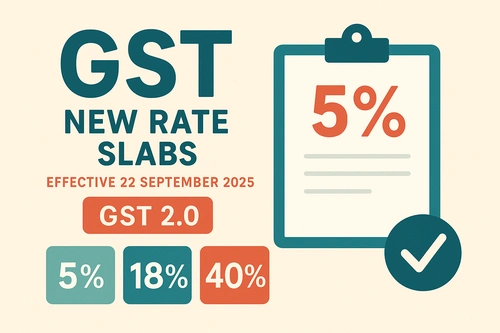
Learn about the new GST rate slabs in India (2025) under GST 2.0. This educational guide covers revised tax rates, key changes, impacted goods and services, and compliance updates for businesses.
💰 Introduction to GST 2.0 Updates in India
Goods and Services Tax (GST) in India has entered a new phase in 2025, often referred to as GST 2.0. The government has introduced updates in GST rate slabs to simplify taxation, reduce disputes, and improve compliance. Understanding the new GST rate slabs in India for 2025 is essential for businesses, professionals, and consumers.
- GST rate rationalisation in 2025
- Simplified tax structure under GST 2.0
- Impact on businesses and consumers
📘 What is GST and Why It Matters
GST is a unified indirect tax system introduced to replace multiple indirect taxes in India. It is applicable on the supply of goods and services and plays a crucial role in the country’s economic framework.
- One nation, one tax system
- Eliminates cascading tax effect
- Boosts ease of doing business
🚀 What is GST 2.0?
GST 2.0 refers to the next phase of GST reforms focusing on rate simplification, stronger compliance, and technology-driven enforcement.
- Rationalised GST slabs
- Reduced classification disputes
- Technology-driven compliance
⚖️ Why New GST Rate Slabs Were Introduced
Over the years, multiple GST slabs created confusion and compliance challenges. The 2025 update aims to make GST more predictable and business-friendly.
- Too many rate slabs earlier
- Frequent litigation on classification
- Need for revenue stability
📊 Old GST Rate Structure Overview
Before GST 2.0, India followed a multi-slab GST structure with varying rates for different goods and services.
- 0%, 5%, 12%, 18%, and 28% slabs
- Multiple exemptions
- Complex classification system
📈 New GST Rate Slabs in India – 2025
Under GST 2.0, the government has proposed fewer and more streamlined tax slabs to improve compliance and reduce ambiguity.
- Reduced number of GST slabs
- Clear distinction between essential and luxury goods
- Improved transparency in taxation
🟢 0% GST Slab – Essential Goods
Essential goods continue to remain under the 0% GST slab to ensure affordability for the common public.
- Unbranded food grains
- Fresh fruits and vegetables
- Basic healthcare services
🟡 Lower GST Slab – Daily Use Items
Daily-use and essential household items are placed under the lower GST slab to control inflation and support consumers.
- Packaged food items
- Basic clothing
- Public transport services
🔵 Standard GST Slab – Most Goods & Services
The standard GST slab under GST 2.0 covers the majority of goods and services and aims to be the most commonly applied rate.
- Consumer durables
- Professional services
- Telecom and IT services
🔴 Higher GST Slab – Luxury & Sin Goods
Luxury and sin goods attract a higher GST rate to discourage excessive consumption and boost government revenue.
- Luxury cars
- Tobacco and alcohol substitutes
- High-end consumer products
🧾 GST Rate Changes on Services
GST 2.0 also brings clarity and minor adjustments to GST rates applicable on services.
- Simplified service classification
- Reduced disputes on tax rates
- Uniform taxation approach
🏢 Impact of New GST Slabs on Businesses
Businesses across sectors will experience changes in pricing, compliance, and input tax credit due to the revised GST slabs.
- Simplified compliance structure
- Better pricing clarity
- Reduced litigation risk
🛒 Impact of GST 2.0 on Consumers
Consumers may see price stability and transparency due to rationalised GST rates.
- Lower tax on essential items
- Clear tax breakdown on bills
- Reduced hidden tax burden
🔄 Changes in Input Tax Credit (ITC)
GST 2.0 strengthens input tax credit mechanisms to prevent misuse while ensuring genuine credits reach businesses.
- Stricter ITC compliance
- Improved invoice matching
- Reduced fake credit claims
🖥️ GST Compliance Updates in 2025
With GST 2.0, compliance is becoming more automated and data-driven.
- Enhanced GST portal features
- Auto-populated returns
- Stronger analytics and monitoring
🏭 GST 2.0 Impact on MSMEs
MSMEs are expected to benefit from simplified GST slabs and reduced compliance burden under the new system.
- Simpler tax calculation
- Lower compliance cost
- Improved cash flow
📝 GST Registration & Rate Applicability
Businesses must understand the applicable GST rate after registration to ensure correct invoicing and compliance.
- Correct HSN and SAC usage
- Accurate tax invoicing
- Avoid penalties and notices
📦 Sectors Most Affected by New GST Slabs
Certain industries are more impacted by GST rate slab changes due to their product mix and pricing structure.
- FMCG sector
- Hospitality and tourism
- Manufacturing industries
🎯 Government Benefits of GST 2.0
GST 2.0 strengthens the tax system while supporting economic growth and transparency.
- Higher tax compliance
- Reduced tax evasion
- Stable revenue collection
🎉 Final Conclusion
The New GST Rate Slabs in India for 2025 under GST 2.0 mark a significant step towards a simpler, more transparent, and efficient indirect tax system. By reducing the number of slabs, improving compliance mechanisms, and leveraging technology, GST 2.0 benefits businesses, consumers, and the government alike. Staying updated with these changes is essential for smooth business operations and informed financial planning.
- Understand applicable GST rates
- Stay compliant under GST 2.0
- Plan pricing and taxes smartly